Search our website for news, courses, and general information
13th Mar 2026
On Tuesday 10th March, employers, industry organisations and training providers came together at the Abingdon campus to launch the Electrotechnical Training and Careers Alliance (ETCA) for the Thames Valley.
Organised by the Electrical Contractors’ Association, the initiative aims to strengthen collaboration between industry and training providers in order to address skills shortages and support the next generation of electricians entering the sector.
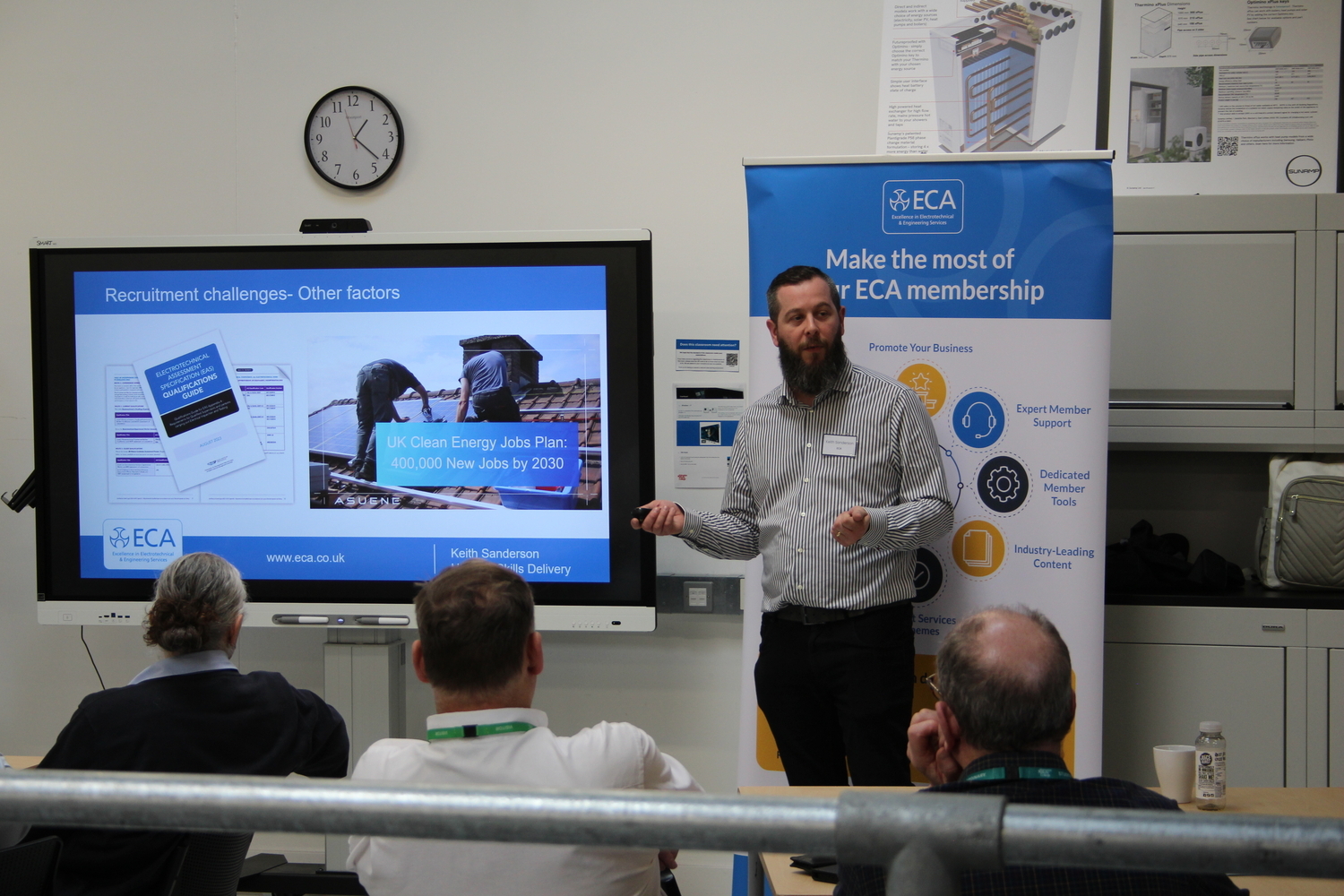
Keith Sanderson, Head of Skills Delivery from the ECA, explained that the organisation represents around 2,300 electrical contracting businesses across the UK, many of which are facing the same workforce pressures.
“There are big skills gaps,” he said. “The pipeline of young people accessing careers in electrical contracting is becoming more challenging. Factors such as the minimum wage doubling over the last two years mean there are effectively fewer seats at the table.”
The Electrotechnical Training and Careers Alliance (ETCA) brings together electrical contractors, regional employers and key organisations including the Chamber of Commerce, local authorities and industry bodies such as the Electrotechnical Certification Scheme (ECS) and NICEIC.
Training providers in attendance were from Bucks College Group, JTL, Oxford Energy Academy, Newbury College and local employers included Darke & Taylor, Copper Connexions Ltd, West & West Ltd, Entric Services Ltd, O & O Electrical Ltd, Bojen Electrical Ltd, Lowe & Oliver Ltd.
“It’s a bit of a who’s who of the sector” he said. “What we’re doing is bringing together people who can really make a difference.”
The Thames Valley alliance is the eighth regional group to be established nationally, building on lessons learned from similar collaborations across the country. By examining regional workforce data and industry needs, the group will work to identify both immediate solutions and longer-term strategies to strengthen the skills pipeline.
“By bringing these alliances together nationally, we can create a much stronger collective voice” he added. “When eight regions are saying the same thing about the challenges facing the sector, that gives us a louder voice when it comes to lobbying government.”

Sam Deverall, Contracts Director, at Entric Services Ltd who employ a number of apprentices with the College, highlighted how the rapid shift towards renewable technologies is changing the skills needed within the industry.
“The industry is going towards renewables and electrical courses need to come up to that level and teach things like air source heat pumps. At the moment we’re still teaching systems that we don’t really install anymore, so the syllabus needs to change to stay relevant to what we’re actually doing out in the industry.”
Recruitment and retention were also raised as key concerns.
“It’s difficult to get hold of a qualified electrician these days” he said. “The very good apprentices often leave quickly to work for themselves, and experienced electricians are in very high demand. A lot of the good ones are also retiring, so there’s a massive gap in the middle.”
Sam added that more support is needed to help smaller businesses take on apprentices, as the financial commitment can be a barrier. He also suggested that apprenticeship sharing models could help address the issue, allowing smaller firms to collaborate so apprentices can gain a wider range of experience across different types of electrical work.
“If smaller companies could share an apprentice, they wouldn’t have to carry the burden for the full four years” he said. “It would also give apprentices experience across different parts of the industry, which would really benefit their development.”

Reflecting on the day, our Construction Skills Project Lead at the College, Will Gibbs shared:
“The launch of the Thames Valley Electrotechnical Training and Careers Alliance at the college yesterday was hugely encouraging. Our discussions around removing the barriers faced within the electrical industry across the Thames Valley region were honest, constructive, and solution‑driven. It’s clear that Abingdon & Witney College is well positioned and ready to support the sector in addressing these challenges. Even more promising is that the conversations translated into immediate actions agreed during the meeting, demonstrating a real and shared commitment to progress.”
The new Thames Valley alliance will continue to bring together employers, educators and industry organisations to explore practical solutions that ensure training keeps pace with the needs of the modern electrotechnical sector.